Revenue Doesn’t Equal Success
One of the most common misconceptions I see—both from new business owners and people outside the business world—is the belief that a company with high revenue must be successful.
It’s easy to understand why.
When you hear that a business generated $5 million in sales last year, it sounds impressive. But revenue alone tells only a small part of the story.
In reality, two businesses with identical revenue can have completely different levels of profitability, cash flow, and long-term success.
Revenue is important—it keeps the doors open—but it doesn’t guarantee that a business is healthy, profitable, or even surviving.
Let’s take a closer look at why.
What Is Revenue?
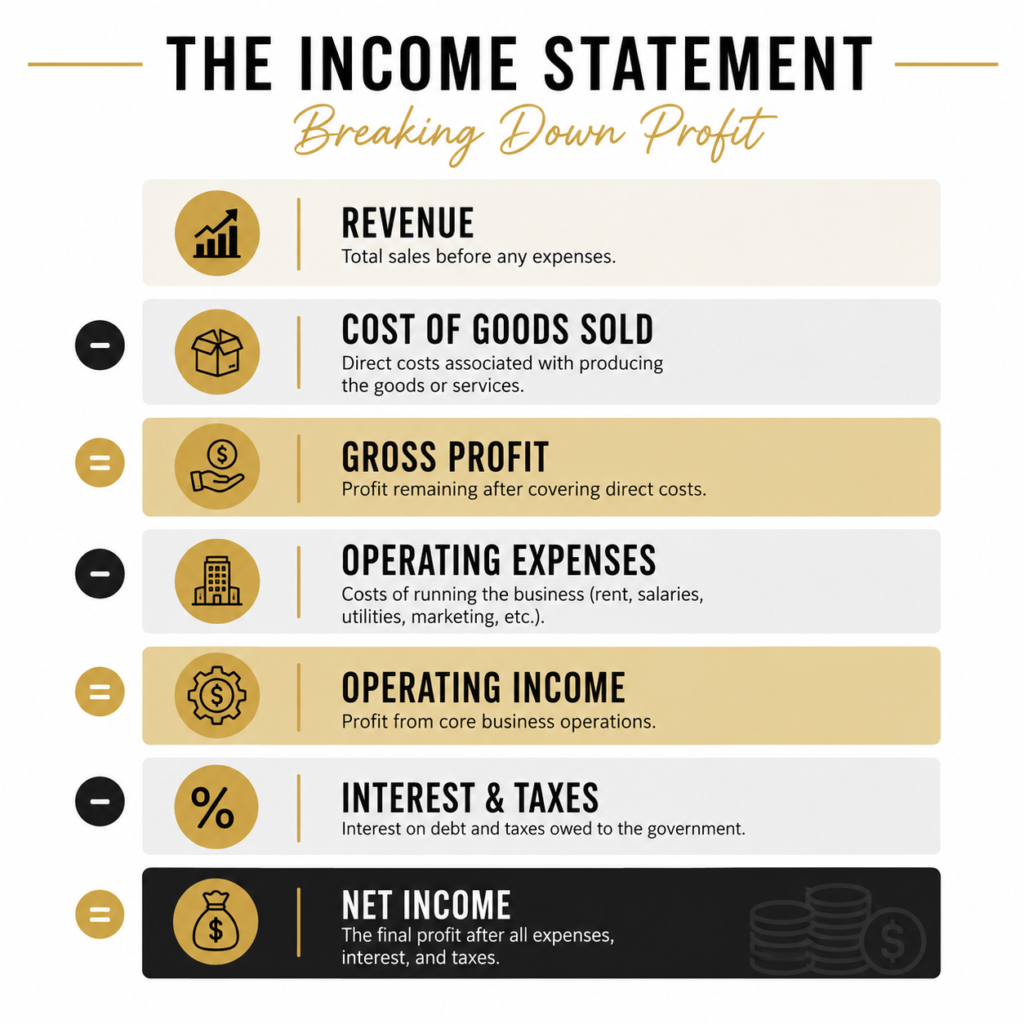
Revenue is simply the total amount of money a business earns from selling its products or services before expenses are deducted.
For example, if a landscaping company completes $750,000 worth of work during the year, its revenue is $750,000.
That number says nothing about how much money the business actually kept.
To determine that, you have to consider everything it cost to generate those sales.
Revenue Is Only One Piece of the Puzzle
Imagine two businesses that each generate $2 million in annual revenue.
Business A earns a net profit of $400,000.
Business B loses $100,000.
How is that possible?
Because expenses matter.
Revenue tells you how much money came in.
Profit tells you how much money remained after paying employees, purchasing inventory, covering rent, paying insurance, marketing the business, maintaining equipment, and every other cost required to operate.
A business can have incredible sales while still struggling financially if expenses consistently outpace revenue.
Some Businesses Are Naturally More Expensive to Operate
One reason revenue can be misleading is that not every business requires the same level of investment.
Some businesses are relatively inexpensive to operate.
For example:
- Accounting firms
- Marketing agencies
- Software developers
- Consultants
These businesses often rely primarily on people rather than expensive physical assets.
Other businesses are extremely capital intensive.
Examples include:
- Manufacturing companies
- Construction contractors
- Trucking companies
- Farming operations
- Machine shops
These businesses may require millions of dollars in:
- Buildings
- Heavy equipment
- Vehicles
- Machinery
- Inventory
A manufacturing company generating $20 million in revenue may ultimately earn less profit than a consulting firm generating $3 million simply because its operating costs are significantly higher.
This is one reason comparing businesses based solely on revenue can be misleading.
You Have to Spend Money to Make Money
There’s an old saying in business:
“You have to spend money to make money.”
In many cases, that’s true.
Businesses often invest in:
- Employees
- Advertising
- Equipment
- Technology
- Training
- Inventory
These expenses aren’t necessarily bad.
In fact, many of them help generate future revenue.
The goal isn’t to eliminate expenses altogether.
The goal is to ensure those expenses create enough additional revenue—or improve efficiency enough—to justify their cost.
A new piece of equipment that allows your employees to complete jobs twice as fast may be an excellent investment.
An expensive software subscription that no one uses probably isn’t.
Successful businesses understand the difference.
Profitability Is More Important Than Size
Many business owners dream of growing revenue every year.
Growth is exciting.
But bigger doesn’t always mean better.
Let’s look at an example of two businesses:
Business A
- Revenue: $10 million
- Profit: $200,000
Business B
- Revenue: $2 million
- Profit: $500,000
Despite generating only one-fifth the revenue, Business B actually earns more money.
Which business would you rather own?
The answer becomes much less obvious once profit enters the conversation.
Growth that doesn’t improve profitability can actually increase stress, complexity, and financial risk.
Sometimes the healthiest business isn’t the biggest one—it’s the one that consistently generates strong profits.
Margins Matter
This is where profit margins become incredibly important.
A profit margin measures how much of each dollar of revenue actually becomes profit.
For example:
- A business with a 5% profit margin keeps five cents of every revenue dollar.
- A business with a 25% profit margin keeps twenty-five cents of every revenue dollar.
Higher revenue with shrinking margins isn’t always progress.
Many businesses chase sales while unknowingly becoming less profitable.
Healthy businesses monitor both revenue and margins because they work together to tell the complete story.
Revenue Doesn’t Pay the Bills—Cash Does
There’s another important point that is easy to overlook.
Even profitable businesses can fail if they run out of cash.
Imagine a contractor completes a $500,000 project.
The revenue has been earned.
The profit looks great on paper.
But the customer won’t pay for another 90 days.
Meanwhile, the contractor still has to pay:
- Employees
- Suppliers
- Equipment loans
- Insurance
- Fuel
Without sufficient cash on hand, the business can experience serious financial stress despite appearing profitable.
This is why business owners should pay attention to revenue, profitability, and cash flow—not just one of them.
We’ll explore cash flow in much greater detail in future articles because it’s a commonly misunderstood area of running a business.
Focus on Building a Healthy Business
Revenue is exciting because it’s easy to measure.
Profitability requires a little more analysis.
Long-term success requires even more.
Healthy businesses regularly evaluate questions like:
- Are our expenses producing value?
- Are our profit margins improving?
- Is our pricing keeping pace with rising costs?
- Are we generating enough cash to support future growth?
- Are we growing sustainably?
These questions often matter far more than simply asking, “How much revenue did we generate this year?”
My Two Cents
Revenue is an important measure of growth—but it should never be mistaken for success.
A business isn’t successful simply because sales are increasing.
Success comes from building a business that consistently generates healthy profits, produces reliable cash flow, and creates long-term value for its owners.
As your business grows, try to shift your mindset from asking, “How can I increase revenue?” to asking, “How can I improve the overall health of my business?”
Sometimes those two goals align.
Sometimes they don’t.
The businesses that thrive over the long run are usually the ones that understand the difference.
As we continue this business finance series, we’ll build on this idea by diving deeper into topics like profit margins, cash flow, financial statements, and the key performance indicators every business owner should understand, so come back to learn more.
— Brendan Tiedeman, CPA, CVA
Disclaimer
This article is for educational and informational purposes only and should not be considered tax, accounting, legal, or financial advice. Every business is unique, and financial decisions should be made based on your specific circumstances. Consult with a qualified CPA or financial professional before making significant business decisions.